
 01
01WASH in Temples
Restoring dignity and hygiene at India’s most visited spiritual destinations.
Explore programWATER, SANITATION & HYGIENE
One Temple, One School, One Street at a Time.
Turning grassroots learning into scalable programs, sound policy and lasting behaviour change.
WHAT WE DO
Water, sanitation and hygiene save lives and reduce the economic burden of disease. Saaf Sutra works where sanitation matters most and the gaps are most overlooked.
WHO WE ARE
Saaf Sutra is a WASH-focused institution working to make safe sanitation and water security a nationwide reality. We build scalable, community-owned sanitation models; document what works; and use that evidence to shape policy and unlock sustained funding partnerships with technology, training, and research as our foundation.
Safe sanitation and water security are not yet a lived reality for every Indian. Saaf Sutra exists to close that gap; not through isolated projects, but through infrastructure bundled with behaviour change, backed by evidence, and designed to influence how India builds, funds, and governs WASH at scale.
Who we are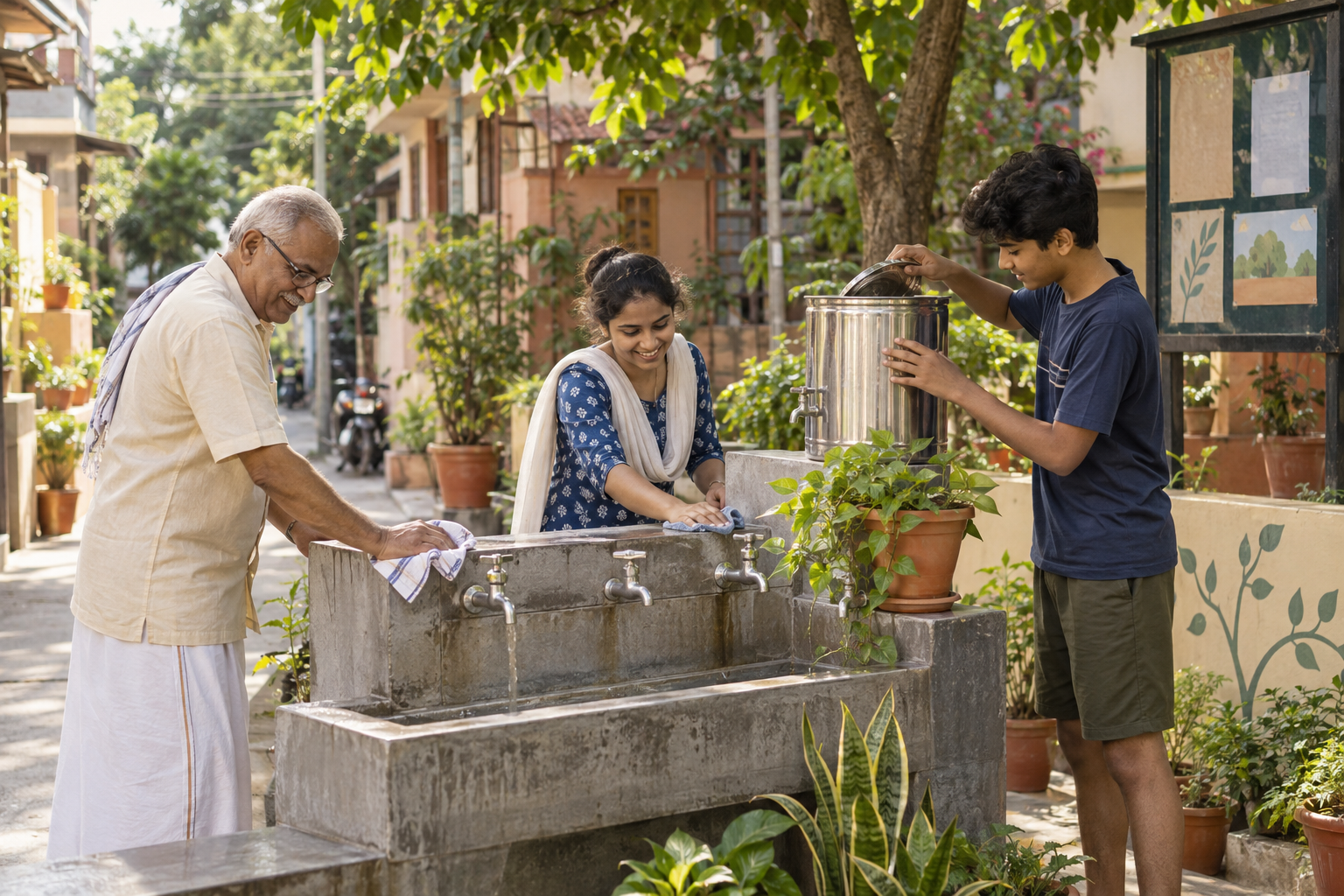
OUR FLAGSHIP PROGRAMS
Saaf Sutra concentrates its work in three arenas where sanitation failure is most visible, most persistent, and most consequential for public health and dignity.
01Restoring dignity and hygiene at India’s most visited spiritual destinations.
Explore program 02
02Safe toilets, clean water and hygiene habits for every child, every day, with priority for schools with girl children.
Explore program 03
03Making streets, markets and public spaces sanitation-safe.
Explore programWHY INDIA NEEDS SAAF SUTRA NOW
India has built sanitation infrastructure at record scale over the last decade. The next challenge is different: keeping toilets functional, keeping water systems maintained, keeping behaviour change alive after the ribbon-cutting and doing it in the spaces where footfall, tradition, and neglect intersect most sharply: religious sites, schools, and public streets. Saaf Sutra was built to solve exactly this second-generation problem.
SUPPORT SAAF SUTRA
Saaf Sutra's model is built for partnership because no single actor can close India's WASH gap alone. We work with funders who want their capital to move from a single project to a scalable, evidence-backed program with a real path to policy influence.
BUILD INDIA’S WASH FUTURE